
Repeated exposure to traumatic events can significantly impact a child’s brain development.
But what are we referring to when we talk about trauma?
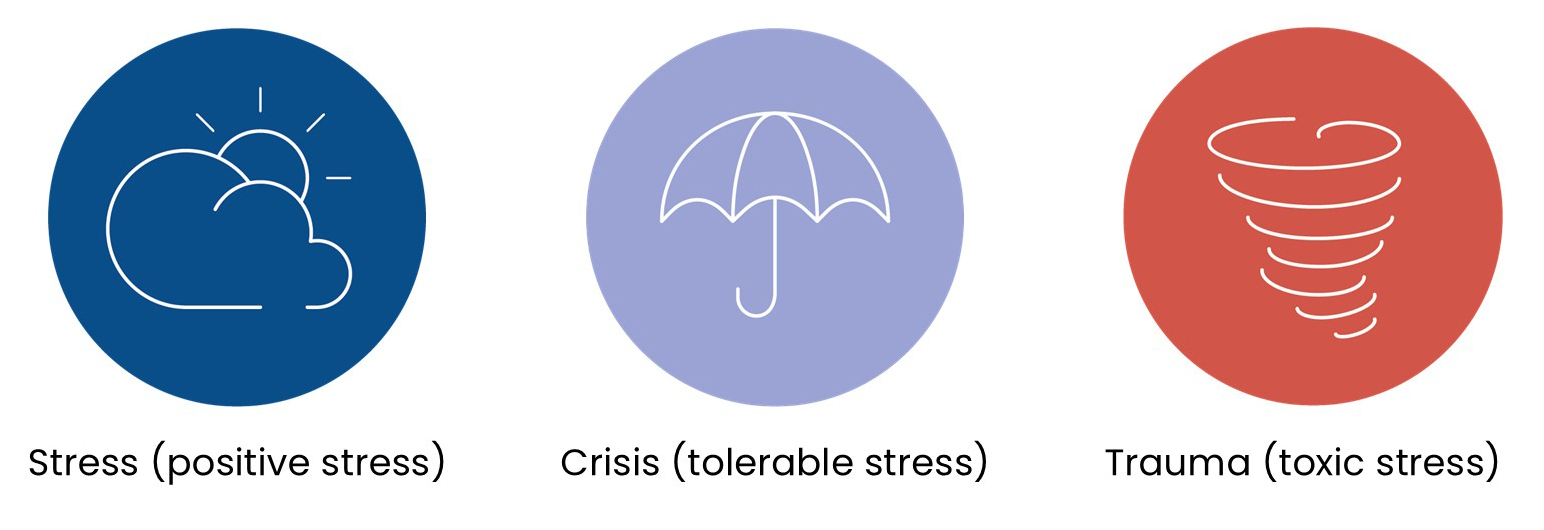
First, it’s important to understand the difference between stress, crisis, and trauma.
Everyone experiences stress. For children, stress often comes from facing something new or unfamiliar. This stress comes in short bursts, and is usually for a specific purpose. This kind of stress is often positive, and helps children grow.
Examples of positive stress:
- The first day of school or kindy
- Trying a new or unfamiliar food
- Learning to use the toilet
- Starting a new hobby
- Stepping outside their comfort zone socially
A crisis is something many children will also experience. These can be distressing and unpleasant, but with the support of a safe, predictable adult, the stress children feel is usually tolerable and doesn’t necessarily lead to long-term harm.
Examples of crisis:
- Loss of a family member or pet
- Breaking an arm after falling off the monkey bars
- Being in a minor car accident
- Parents going through a divorce
It’s important to remember: what’s tolerable for one child might be traumatic for another.
In contrast, trauma creates a level of stress that is toxic to the brain and body.
Trauma is an event, or series of events, such as abuse, neglect, or tragedy, that leaves a child feeling helpless and terrified. It can shatter a child’s sense of safety and stability.
Trauma might happen as a single incident, which we call ‘simple trauma’. This could be something like a scary car crash, or being attacked by a dog. These events are overwhelming and terrifying, and might lead to a child having some short to medium-term traumatic effects. With support to recover, pervasive, long-term psychological effects that impact daily life can usually be avoided.
When trauma happens repeatedly — especially in the form of abuse, neglect, or maltreatment — this is called complex trauma.
Complex trauma has more far-reaching effects on our wellbeing. It can shape how a child sees themselves and the world, how they form relationships, and how they handle stress and emotions in everyday life. Complex trauma is often associated with interpersonal relationships, or violence.
Complex trauma often occurs in the context of relationships – especially when caused by someone the child depends on for care and protection.
These experiences can leave children feeling unsafe and unable to trust others. They may struggle to form healthy attachments with caregivers — relationships that are essential for feeling secure, understood, and valued.
The Blue Knot Foundation has some excellent resources and factsheets to help you understand childhood trauma.
When complex trauma occurs at a young age, it can lead to developmental trauma.
What do these impacts from toxic stress mean for children?
For one, children and young people may still struggle to feel safe, long after they have left the unsafe environment. This is because their body is still releasing stress chemicals, which tell the brain and body they are unsafe, even when there is no actual threat present.
The other impact from toxic stress is that children who spend more time on high alert (with their lids flipped) spend less time with their thinking brain in control. This creates an imbalance, and reduces opportunities for children to learn valuable ‘thinking brain’ skills.
Are very young children less affected by repeated exposure to traumatic situations, because they are too young to understand what was happening?
No – in fact, the opposite is true. The younger you are, the more vulnerable your brain. While a baby or toddler might not have a clear, conscious memory of a traumatic event, the body remembers, leaving traces of toxic stress.
Now that you know a little more about trauma from completing the understanding trauma section, you can continue the package to learn how to support children and young people with trauma.